Craft Lesson: How to Cope with Emotional Interviews

Craft Lessons

Like countless others, my heart went out to the victims and families and friends of those who lived and died in the shocking June 24 collapse of the Champlain Tower South condominium in Surfside, Fla. I also had in mind the reporters who descended on the scene and faced the painful task of interviewing survivors and the loved ones of those dead or still missing. 

In my two decades as a newspaper reporter, I became well-acquainted with that aspect of the job. At one point, if you’d asked me about my beat, I’d have replied, “Death.” 

More times than I can count, I was dispatched to write about those left behind after the unthinkable happened: a child killed by a school bus, the high school friends of a classmate killed during a failed 1980 rescue mission to rescue the American hostages held captive by Iranian revolutionaries, the bride-to-be caught in a crossfire between police and a desperate parolee. My father had died when I was ten, and that often proved an effective way to show empathy for people I imposed on at one of the worst moments of their lives. Death binds. 

When I was teaching at The Poynter Institute, a reporter once emailed to ask about the appropriate response when a subject breaks down and begins to cry during an interview, a common occurrence.

“I’m not a very touchy-feely person,” the reporter said, “so I feel as though it would come across as fake or forced if I were to make myself give the subject a hug or touch their hand or something similar to that. But I feel so heartless simply continuing the interview while they dab at tears.

“Most often, these subjects are essentially strangers whom I have engaged in an emotional interview, so I feel as though I would be crossing some sort of line by moving closer to them or touching them or crying with them as though we were close friends.”

For help, I touched base with Joe Hight, then managing editor of The Oklahoman and no stranger to covering trauma in the news. 

As a reporter and editor, he covered the first mass post office shooting in 1986 in Edmond, Okla., the 1995 domestic terrorist bombing of the Alfred P. Murrah Federal Building in Oklahoma City and the aftermath of killer tornadoes. 

He was also president of the executive committee of the Dart Center for Journalism and Trauma. It’s “a global network that brings together journalists, educators and health professionals to improve media coverage of trauma, conflict and tragedy, as well as the consequences of such coverage for those working in journalism.”

As reporters increasingly face emotional interviews after what seems like an unending cycle of mass shootings, wildfires, hurricanes and other catastrophic weather events, Joe’s advice remains timely. 

“You are not the only journalist who has struggled or will struggle when interviewing people who become emotional during an interview,’” he counseled.

“Certain interview questions may prompt an emotional response, especially if the subject is remembering a loved one who died tragically. It’s your response afterward that is important.

“Most people don’t need a hug from a stranger, and all of them don’t need a fake or forced response. They need someone who’s compassionate and human.”

I wish that Joe’s wise advice had been available to me as I sat with friends and family who were grieving a loss. I’m grateful, though, that it may offer help for reporters who find themselves, as they inevitably will, in that situation someday. His tips:

First of all, don’t stop the interview because someone cries and you feel uncomfortable. If you do, you might deprive the person from expressing natural and proper emotions.

Simply express again how sorry that you are about the situation or loss and then be especially sensitive to the subject from that point on. Put down your notebook and ask whether there’s anything that you can do to help, such as getting a tissue or a glass of water. (You might even want to bring tissue yourself if you think the interview could become emotional.)

When the subject becomes somewhat composed again, ask softly “Are you okay?” and then “Do you want to continue the interview?” If the answer is yes, politely express that you’re taking notes again and ask the next question in a soft tone. Then be patient and listen.

At the end of the interview, thank the subject for talking to you “during these difficult times.” Then ask if you can call later to check on facts or quotations, and possibly on information that may have been missed.

If the person sobs uncontrollably or cannot respond further, it’s then that you should consider discontinuing the interview until a later time. Before leaving, ask whether the subject wants you to contact someone or needs anything else. Then ask whether it’s okay to call or return at a certain time. A simple nod may be the reply.

Finally, if you are troubled by what happened during the interview, be sure to talk to someone who’s a sensitive and trusted listener so you can debrief from the emotions that you absorbed yourself.
​​

Horrible Messy Drafts: Four Questions with Lois Kapila

Interviews

Lois Kapila is the editor and a reporter at the Dublin Inquirer, an independent reader-funded newspaper in Dublin, Ireland. She has worked at The Statesman newspaper in Kolkata, India, and freelanced for anywhere that will publish her. In 2019, she was shortlisted for the Orwell Prize for Journalism and European Journalist of the Year. 

What is the most important lesson you’ve learned as a writer?

To not be afraid to think. It sounds stupid but for a long time I think I was scared to think, as if by asking questions about what I’d been told or engaging too deeply with what I was reporting on, would be biased in some way.

It took me a while to get past that, to realize it was okay to not just be a scribe, and to clock that following a fair, journalistic process—and thinking a lot and asking plenty of questions along the way to all kinds of people—was the most important thing that helps you get as close to the truth of something as possible. 

What has been the biggest surprise of your writing life?

That I’m doing it. I still can’t get over the fact that I’m lucky enough to have a job where I get to meet, and listen to, and talk to, so many people. I hope I always stay surprised. I dread the day when I take that for granted.   

If you had to use a metaphor to describe yourself as a writer, what would it be and why?

Can I be a mapmaker? Trying to chart out the world so we can see where we stand and where we’re headed or could go—although, I’m thinking ideally more here-be-monsters than AA road map.

Or maybe a glassblower, training for years and years to craft something simple and clear. (I guess that’s also turning hot air into something beautiful, hmmm…)

What’s the single best piece of writing advice anyone ever gave you?

Write drafts. Horrible messy drafts. And start them straight away and don’t get hung up on how ugly they are. That, of course, is one of the many things I’ve learnt from you by the way, Chip.

Like pretty much everybody reporting and writing these days, I’m so pressed for time and if I don’t start writing as soon as I start reporting, I don’t have the breathing space to revise and cut and rearrange and spot gaps.

BOOKBAG: “12 MINUTES AND A LIFE”

Bookbag

Story by Mitchell S. Jackson and a Nieman Storyboard annotation

12 minutes and a Life,” a Runner’s World story by Mitchell S. Jackson, recounts the short life and lynching of Ahmaud Arbrery, who died in 2020 running while black in Brunswick, Ga. Last month, the piece won a Pulitzer and a National Magazine Award for feature writing. Earlier this week, Nieman Storyboard published an annotation of Jackson’s prize-winning story, the product of a long interview I had with the writer. In just three weeks of non-stop work, Jackson reported and wrote the story, which was published four months after three white men ambushed Arbery. It’s an object lesson in narrative magazine journalism; one that combines traditional journalism, forensic presentation, and Black English to tell the story. We talked about the culture and evolution of language, braided structure, and why Jackson put himself in the narrative.

The annotation offers extraordinary insight into how an innovative writer and scholar works and thinks in ways that expand the possibilities of narrative nonfiction. One of which is that a 6,000 word masterpiece doesn’t always require a year to produce. I learned a ton: about reporting, writing, linguistics, diction, Black culture, and story structure from our conversation. I think you will, too.

P.S. After our conversation, I devoured Jackson’s debut novel, “The Residue Years,” and a memoir, “Survival Math: Notes on an All-American Family.” They are both raw, gutsy and acutely personal portrayals of the blight of poverty, crack addiction and dealing and the world of pimping out women for prostitution amid the small Black population in Portland, Ore. I can’t recommend them more enthusiastically.

Guest Craft Lesson: What postcards can teach writers by Jacqui Banaszynski

Craft Lessons

Postcards have always held a special place in my life. If I were a collector, postcards would be high on my list. Not for the initial image, but for the act of sending and receiving, and the magic of storytelling involved in that action.

When I send students off into the world or reporters on assignment, the one thing I ask is that they send me a postcard. I’m always delighted when one follows through. I love seeing the images they choose, being introduced to their handwriting (a rare thing these days) and being enchanted by the mini-story they’ve chosen to tell me.

Because that’s another huge value of postcards. They are the perfect venue for practicing the craft ~ and purpose ~ of storytelling.

For years, when I traveled, I would send at least one postcard a day. I’d usually write at day’s end, perhaps at a bistro over a glass of wine, or maybe mid-afternoon over a coffee. My goal was not to say “Hey! I’m at the Parthenon!” But to instead share a moment or scene or experience from that day. To tell a story.

The ritual of putting pen to paper caused me to slow down and reflect on my day. To enter that mental/emotional story space that writers occupy.

Knowing I would write reminded me to report ~ to pay closer attention to the world as I moved through it. It caused me to be on alert to the little dramas that played out around me ~ to note the particular blue of the African dusk, the disorientation that came from staring at the stars in the southern hemisphere, how a table of Romanians kept guard over their too-drunk friend. (And yes, to find a post office and a stamp.)

Knowing the writing space was limited ~ maybe a 2×2 inch square ~ took the pressure off. The blank page/screen can seem endless and intimidating. A 2×2-inch postcard square? Hardly.

The reality of that space limit helped me focus. Verbs had to be active. Descriptions spare. Detours eliminated.

Writing on paper instead of the computer meant I had to accept my first draft and then let it go. No do-overs. (In daily news parlance, hit the SEND button!)

Knowing I would be writing to someone I cared about me made me care about what I wrote. It became an investment in a personal connection. I wanted them to see what I saw, to feel some of what I felt, to wonder a bit at my wonderment.

And that means I had to draw on the craft tools that writers employ to create story magic: scene, description, action, metaphor, dialog, sensory detail, tension, emotion.

All in a 2×2-inch square.

I carried this practice forward to classes and workshops. I once had students write a postcard a day for a month. Another time I had workshop writers pick someone they wanted to thank ~ maybe an inspiring teacher or the editor who gave them a chance or the brother who paid their rent one desperate month in college (Thank you, Jeff.) ~ and send that person a postcard. Capture their relationship and gratitude in a 2×2-inch square.

Of late I have transferred some of this practice to Facebook. When I’m overseas, I make it a mission to post a true story each day ~ what I think of as a nano-narrative. It still teaches me what, as writers, we all need to learn, relearn and practice:

  • Pay attention to the world around you. Slow down. Open yourself to experience. See with your eyes, your mind and your heart.
  • Find the center of a story. Develop a moment, a character, a scene, an experience.
  • Choose words that are vivid and precise, evocative and metaphorical.
  • Lower your standards and learn the value of Anne Lamott’s “Shitty First Draft.” Quit thinking at some point and write.
  • Write ~ deeply and personally ~ to someone you care about. Then learn to care about everyone who might read your writing.

Here are two of my nano-narratives from trips as evidence of all of the above. They are far from perfect. Just little stories.

Romanian Retrospective 14 (10.15.2012) Breakfast in Socodor, far western Transylvania. This was served the morning after a huge welcome dinner the night before. All made at Simina Mistreanu’s mother’s village farm or that of the neighbors. The tomatoes were picked that morning, served with the dew still on them and sweet as apples. Cheese and bread were delivered fresh by neighbors. Large plate of fat-back served with enthusiasm, but I said my health insurance would be cancelled if I indulged.

CHINA DISPATCH 9 (July 11, 2009) ~ I was prayed awake by chanting. Drifted over to the Daci Monastery next to the hotel, paid 3 yuan (45 cents) and entered an oasis of peace. Hundreds of women had shed shoes and purses, donned brown robes from a common laundry basket, and wound round and round the temple through a maze of prayer cushions, chanting in a low, meditative melody as an elderly monk rang a small brass bell to keep time.

Stepping into the Unknown: Four Questions with John D. Sutter

Interviews
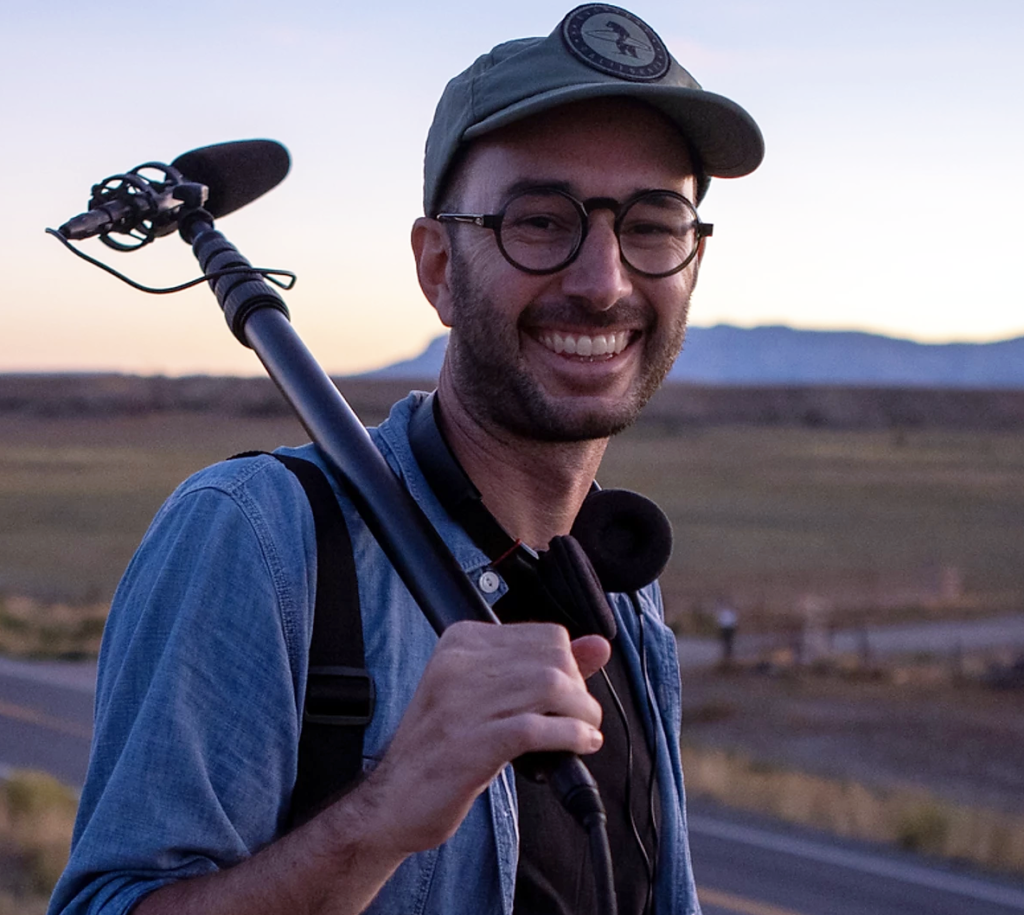
John Sutter/Photo by Edythe McNamee

John D. Sutter is an independent journalist and documentary filmmaker based in Salt Lake City. His work has won the prestigious Livingston Award for Young Journalists, the IRE Award, the Edward R. Murrow Award, the Peabody Award and has received two EMMY nominations — one for new approaches to documentary and the other for environmental reporting. With support from the National Geographic Society, MIT and others, he is directing “BASELINE,” a pioneering documentary series that aims to tell the story of the climate crisis beyond a lifetime. At CNN, where Sutter was a senior investigative reporter, producer and columnist, he created and directed several award-winning projects, including “Two Degrees,” “Vanishing” and “Change the List.” He currently is a Knight Science Journalism Fellow at MIT and is a former Knight Visiting Nieman Fellow at Harvard University. He also is a visiting instructor at The Poynter Institute.

What is the most important lesson you’ve learned as a writer?

I’ve learned to call people back, to follow up, to visit a second and third or fourth time. When I first started writing I unknowingly (and now, embarrassingly) operated in a sort of Story Vacuum mode. I’d swoop in, gather up the story … and then leave. I didn’t follow up often. I didn’t have time to. Or thought that. It was always on to the next thing — right away. I’ve learned that a) I don’t like being the Story Vacuum guy. It feels wrong. And b) you find far better, truer stories — stories you didn’t know are there — when you spend time with people. When your interactions are more reciprocal, more like a relationship, less extractive. This is part of the sentiment behind the documentary I’m working on now (called BASELINE), which is following four communities between now and the year 2050. That’s … an extreme case. But I’ve learned that following-up more consistently can be a quick-and-easy thing to add to your writing practice. It’s kind, it’s human, and it helps us get closer to hidden truths. Or that’s my hope.

What has been the biggest surprise of your writing life?

That it’s not over. I got laid off from a newspaper in 2008, not long after I was out of college, and I thought I needed to find another line of work. I applied to other lines of work. The truth is that my writing life needed to morph and change from there — away from a just-print mindset and toward podcasts and film and multimedia production. It’s surprised me that all of these very different-seeming things are really just extensions of a core writing practice. 

If you had to use a metaphor to describe yourself as a writer, what would it be and why?

Diver! I was a springboard diver when I was younger/fitter (once upon a time, a video clip of me diving, horribly, was the top YouTube hit for “painful belly flop”!) and I think a lot about that leap-of-faith moment that occurs when you start walking down the diving board. Not when you jump. Before that. When you decide to start walking. That act of stepping into the unknown feels a lot like the start of the writing journey for me. I want it to be practiced — it usually doesn’t end in a belly flop, hopefully — but I don’t want to know how things will turn out. That’s the fun. It’s always moderately terrifying. You always learn something.

What’s the best piece of writing advice anyone ever gave you?

Jan Winburn edited my stories at CNN for the better part of a decade, and one of the many things I love about her is that she always answers the phone when you’re the field. Like, always. I called her once from a drought story in the Texas Panhandle. It hadn’t rained there what seemed like forever, and I was going to spend the day with a rancher who was giving up on the business and selling his herd. And then, that morning, it started raining. Not a lot. But enough that the guy decided to hold out hope and keep the cattle. The human part of me was like: Cattle! Rain! Generational business continues! Yay! The CNN-just-flew-me-out-here-to-tell-a-drought-story part of me was like: *#@!. So at some point I went to the car and called Jan, kinda flipping out about how Mother Nature had decided to rain on my drought story. She was calm, per always, and delivered the simplest and best possible advice: Write the rain story.

J